Iran Touched the Red Line (And Oil Just Spiked 3%)
The Intelligence Brief
The friction in the Persian Gulf has escalated from diplomatic rhetoric to kinetic engagement.
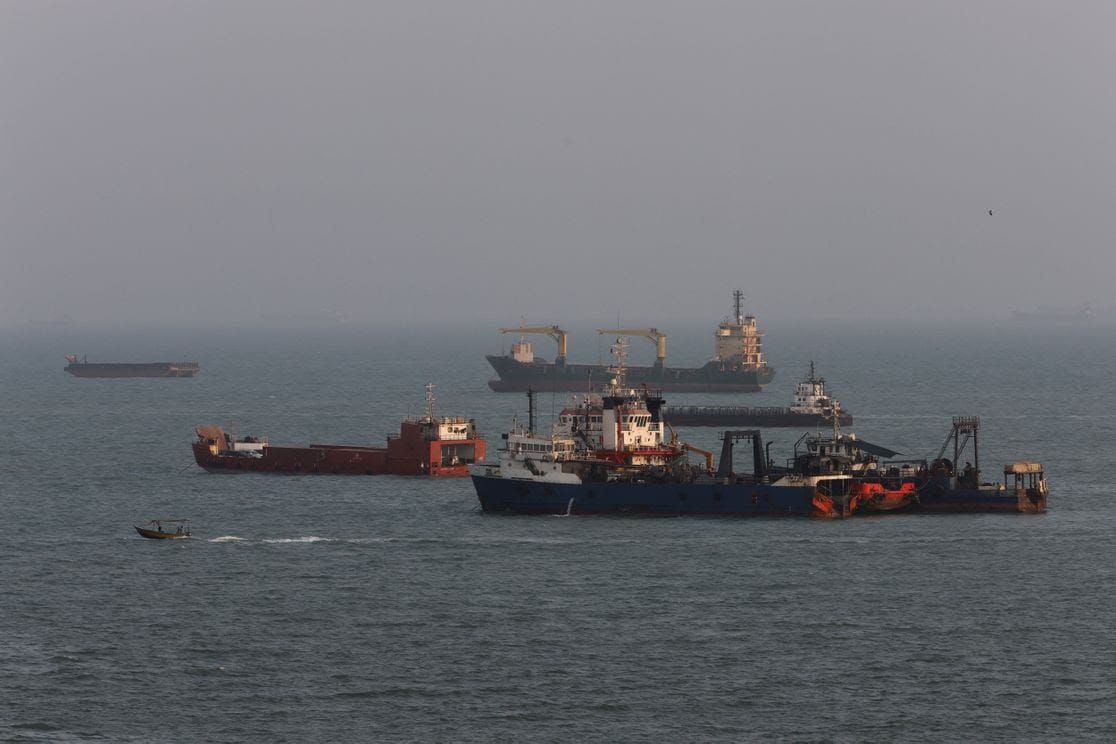
Following explicit warnings against fresh minelaying operations, the U.S. military executed targeted strikes against Iranian military assets designed to deploy sea mines within the Strait of Hormuz. The military action follows last week's operation by U.S. naval forces to clear mines from the strait's primary shipping lane, re-establishing direct enforcement of maritime transit.
Iran reacted swiftly, initiating limited retaliatory strikes against targets in the UAE and Jordan. Simultaneously, rhetoric targeting Iran’s core energy export infrastructure—specifically Kharg Island, which handles the overwhelming majority of Iranian crude exports—reached critical levels.
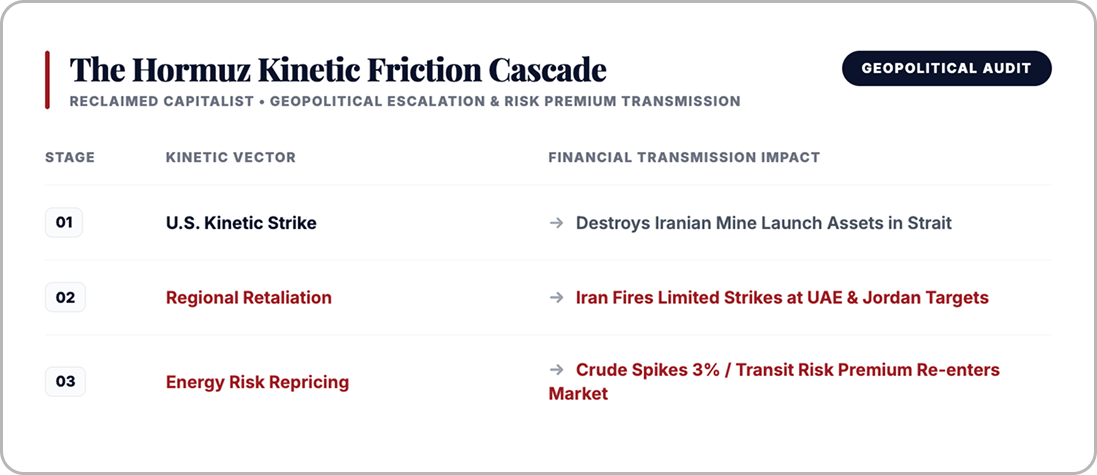
To consumer media, this is another round of Middle Eastern geopolitical headlines.
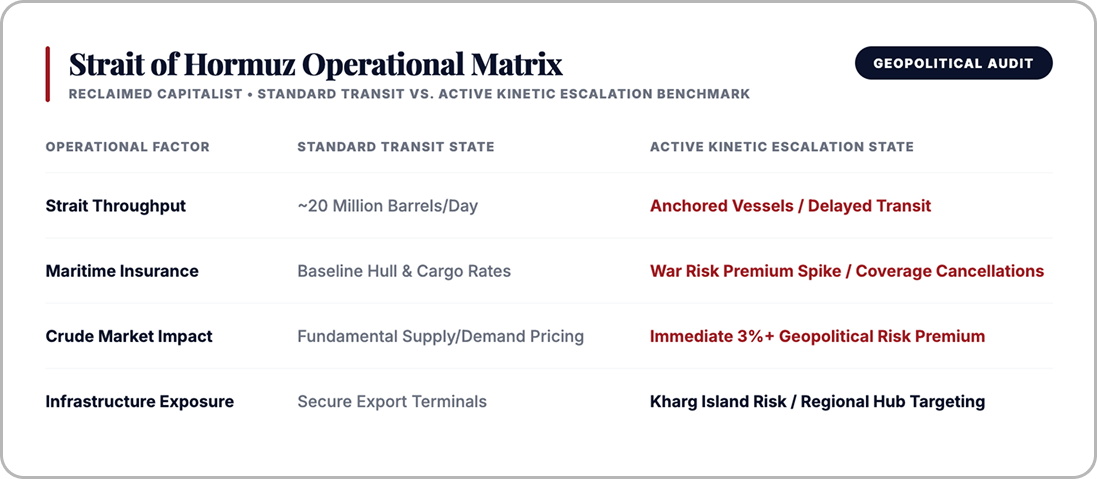
To capital allocators, it is a direct operational threat to the physical transit of global energy supplies. The Strait of Hormuz represents the most vulnerable maritime choke point on earth, handling approximately 20% of global petroleum liquids. Any threat to open transit forces immediate repricing across shipping, insurance, and crude futures.
The Intelligence Brief: Maritime Realities vs. Market Pricing
Let’s strip away the political theater and analyze the physical choke point mechanics.
What the media claims: The military exchange is a temporary tit-for-tat escalation that can be contained without impacting physical global supplies.
What is actually happening at the capital layer: Tanker operators and maritime insurers calculate risk on physical access. Even localized minelaying attempts spike War Risk Insurance premiums, forcing commercial vessels to anchor outside the strait and effectively throttling throughput without requiring a full blockade.
— Sponsored Briefing —
80,000 Devices Sold, 10 Patents, $RYSS Reserved [changes Aug. 31]
Pre-IPO · Nasdaq $RYSS Reserved · $2.50/share

There's a number on the landing page that most people skim past. It's the one that actually matters.
92%.
That's the percentage of window shades, blinds, and curtains worldwide still operated by hand.
Not 50%. Not 30%. Ninety-two.
In a global smart home category that grew to $147 billion this year and is projected to hit $848 billion by 2034, that 92% is the largest untouched surface left.
Every other category in the home went smart. Thermostats — Nest, exited at $3.2B, returning 22x to early investors. Doorbells — Ring, exited at $1.2B. Locks. Lights. Speakers.
Shades stayed analog. Until now.
The reason isn't lack of interest. Somfy, Lutron, Hunter Douglas have all targeted it. They build motorized shades from scratch — expensive, replacement-only, not retrofitable.
RYSE built the only patented hardware that automates the shades you already own. No replacement. No electrician. 10-minute install. Works with Alexa, Google Home, Apple HomeKit out of the box.
It's also why the pre-IPO share price climbed from $0.71 to $2.50 across multiple consecutive rounds — and why the Nasdaq ticker $RYSS is reserved as the stated next step.
Quick reminder of what "stated next step" means in practice: SpaceX hit Nasdaq on June 12 at $1.77 trillion. Retail didn't get an entry there. The people who got the lift bought when the company was private — at a price nobody was paying attention to.
Numbers worth holding in your head:
· $20M+ in lifetime revenue · 70% annual growth
· 80,000+ devices sold to homes, hotels, commercial buildings
· 10 patents granted, defended by an Amazon court ruling against copycats
· 75% gross margins on products priced $99–$199
· $3.2M cleantech grant from a government that doesn't write checks lightly
The Fairmont Hotel in Quebec City uses them. A 56-story tower in San Francisco uses them. They sit on shelves at Best Buy, Home Depot, Lowe's, Amazon.
This is the part where someone usually says: yeah, but the timing.
The timing is now. The next round is open at $2.50. Minimum ~$1,000. IRA eligible. 7-day cancellation if you change your mind. Up to 50% bonus shares at the higher tiers.
When was the last time a smart home category leader sat unnoticed at ground-floor pricing — while you still had a door to walk through?
Important disclosures. This is a paid advertisement for RYSE Inc. made pursuant to a Regulation A+ offering and involves risk, including the possible loss of principal. The valuation is set by the Company; there is currently no public market for the Company's Common Stock. Nasdaq ticker "$RYSS" has been reserved by RYSE; any potential listing is subject to future regulatory approval and market conditions. Past share-price appreciation does not guarantee future returns. SEC qualification does not constitute SEC approval of the merits.
RYSE Inc., 96 Spadina Avenue, Suite 500, Toronto, ON M5V 2J6, Canada
The Sovereign Directive: Tactical Position Audit
As an Individual Sovereign, you do not trade geopolitical headline volatility. You assess physical supply constraints and protect your portfolio against energy shocks.
The Sovereign Execution Plan:
- 1. Audit Upstream Energy Exposure: Maintain dedicated positioning in high-quality upstream oil and gas producers. Geopolitical friction along core shipping lanes acts as a structural floor under global crude prices.
- 2. Track Maritime Tanker Rates: Monitor Very Large Crude Carrier (VLCC) freight rates and maritime insurance surcharges. Spiking transport costs alter global refining margins well before crude prices fully adjust.
- 3. Prepare for Volatility Spikes: Recognize that escalations targeting critical export hubs like Kharg Island introduce non-linear upside risk to commodity prices. Maintain adequate cash buffers to deploy into broader market dislocations.
Ignore the political noise. Track the physical energy lanes, audit your exposure, and guard your capital perimeter accordingly.
Patrick Gibson
The Reclaimed Capitalist