
The $4.00 Benchmark Shattered: U.S. Gas Prices Hit Record Highs
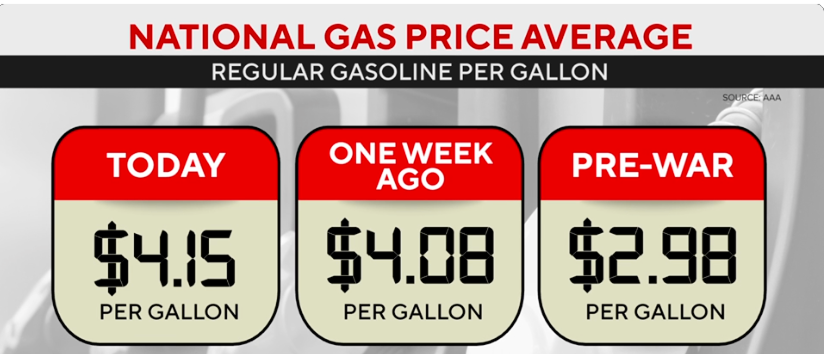
Pump prices break historical records as diesel futures surge and refinery capacity hits physical limits. The macro impact on inflation and yields.
30-SECONDS VERSION
- The Retail Spike: U.S. national average retail gasoline prices officially broke historical records, surging past $4.35 per gallon as crude input costs and refining constraints converged.
- Tesla Car Shocks Everyone (Ad)
- The Refining Bottleneck: Middle distillate inventories (diesel and jet fuel) stand at multi-year lows. Gulf Coast refiners are running at near 98% capacity, leaving zero operational margin for unscheduled outages.
- The Macro Setup: Spiking retail fuel prices act as an immediate drag on consumer discretionary spending, pushing inflation metrics upward and reinforcing the Fed's "higher-for-longer" interest rate regime.
- America’s energy nightmare scenario (Ad)
The U.S. energy landscape has crossed a critical economic threshold. For months, retail fuel prices hovered in a manageable band, buffered by strategic reserve releases and seasonal demand shifts.
That buffer has completely eroded.
Data from the Energy Information Administration (EIA) confirms that average U.S. retail gasoline prices have officially surpassed historical highs. But while headline pump prices command cable news attention, the underlying driver is a structural deficit in the refining layer—specifically, severe tightness in middle distillates like diesel and jet fuel.
Simultaneously, a broader macroeconomic shift is occurring across global supply chains.
Rising transportation costs are working their way through freight logistics, agricultural production, and manufacturing inputs. As fuel surcharges escalate across the transportation sector, the narrative of rapidly cooling inflation is running into physical commodity reality.
For capital allocators, these energy metrics signal an immediate test of corporate pricing power and consumer balance sheet resilience.
The Intelligence Brief: The Refining Margin Spread and Supply Mechanics
Let’s look past retail consumer complaints and examine the structural economics of the energy grid.
What the media claims: Oil majors and retail gas station operators are "price gouging" consumers to inflate short-term profit margins.
What is actually happening at the capital layer: The core bottleneck is not raw crude availability—it is global refining capacity. Over the past four years, millions of barrels per day of global refining capacity were permanently decommissioned or converted to biofuels. The remaining complex refiners are operating at near-maximum capacity, driving crack spreads (the margin between crude oil and refined products) to historic highs.
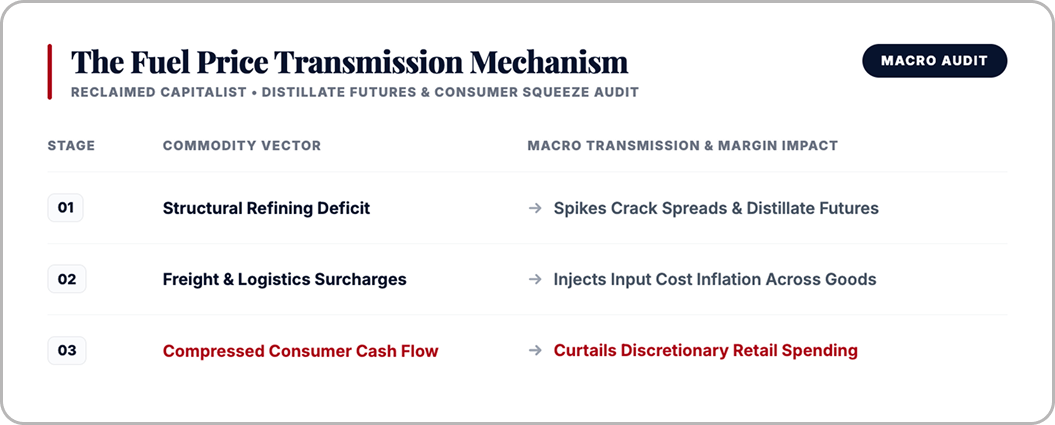
By failing to expand domestic refining infrastructure to keep pace with demand, the energy system remains vulnerable to supply shocks. Every minor outage or maintenance delay translates directly into immediate retail price spikes.
— Sponsored Briefing —
This Tesla Demo Shocks Everyone
"Hi, I'm Jeff Brown...I'm about to get in this Tesla and let it take me a few miles to show you Elon Musk's next Big Project today…
What happens next will shock you…"

Click here to see what happened.
The Economic Vector: How Spiking Fuel Costs Drain the Consumer
The Discretionary Margin Squeeze
Energy is an inelastic expense. Consumers cannot simply stop commuting to work, heating homes, or buying food transported via diesel-powered freight trucks.
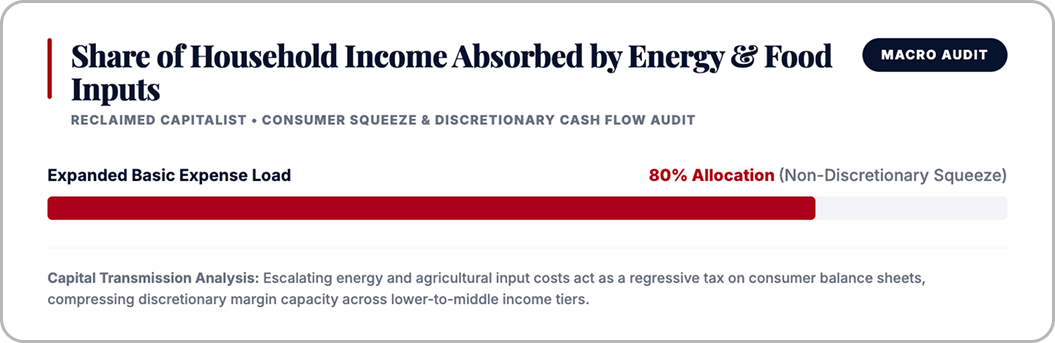
What to Expect From the High-Energy Vector:
- Consumer Discretionary Retrenchment: As fuel costs consume a larger percentage of weekly household budgets, discretionary spending on travel, dining, and non-essential retail will contract over the next two quarters.
- Persistent Freight Surcharges: Logistics and parcel carriers will pass elevated diesel costs directly onto shippers via automated fuel surcharges, keeping wholesale product prices elevated.
- Hawkish Central Bank Pressure: Energy-driven inflation prevents central banks from easing interest rates aggressively, keeping borrowing costs elevated across the entire economy.
The Financial Map: Energy Sector Cash Flows & Equity Dynamics
The Balance Sheet Analysis
To understand how markets are pricing energy assets, we must analyze the interaction between upstream E&P producers and downstream refiners.
Complex refiners possess significant cash-generation capabilities due to elevated crack spreads, while disciplined upstream producers are deploying free cash flow toward dividends and share buybacks rather than expensive new drilling CapEx.
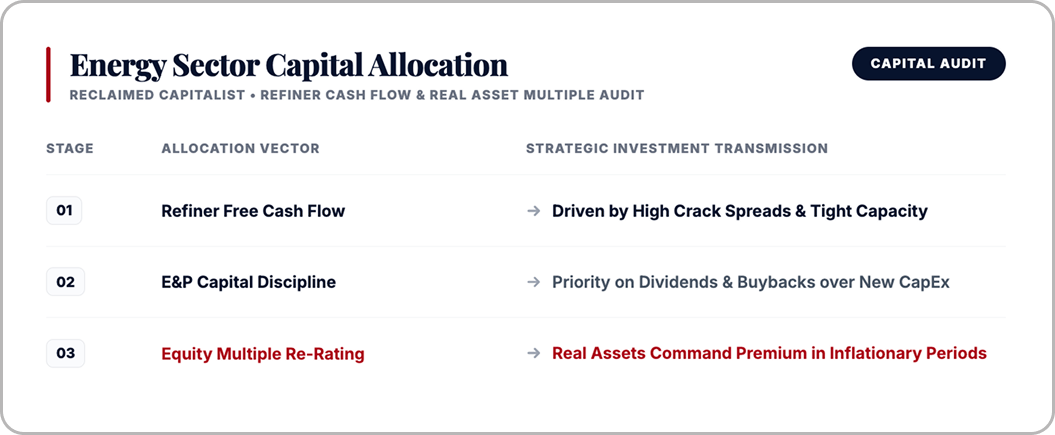
Key Market Vectors for Energy Allocations:
- The Refining Premium: Downstream operators with high coking and hydrocracking capacity benefit directly from wide heavy-light crude spreads and elevated distillate demand.
- The Supply Discipline Floor: Public E&P companies remain committed to capital discipline, refusing to over-invest in production growth. This maintains a structural supply floor under crude benchmarks.
- Bond Yield Pressure: Rising energy costs keep inflation expectations high, putting upward pressure on benchmark Treasury yields and pressuring high-multiple growth equities.
— Sponsored Briefing —
New England. Christmas Eve, 2024.
New England. Christmas Eve, 2024.
It’s when America’s energy nightmare began.
After several regional power plants failed, electric grid operator ISO New England sent out an urgent plea: "Any resource that can respond be online for the evening peak.”
The plant failures caused a shortage of operating reserves during the bitter cold and storm conditions. Lights and heat were lost throughout much of the region. Lives were on the line.
Prices for energy spiked to more than $2,000 per megawatt-hour during the crisis. Up from an average of $130.79 per megawatt-hour.

Fortunately, there were just enough power plants that could respond.
So the total failure of New England’s electrical grid was avoided… this time.
The bad news is, it’s not a matter of if, but when for the Boston area.
Since that near-catastrophe, the energy stability in New England has worsened.
The war in Ukraine, the war in Iran, and now the insatiable demands of AI infrastructure has pushed our energy systems to the limit and the next storm could knock out the power for the entire region for days, or even weeks.
I predict that hundreds of thousands of people will seek refuge in generator-powered public shelters. While homes are without electricity and heat in the dead of winter.
Such an event could set off a chain reaction that would wreck huge tracts of our economy and send shrapnel ripping through the stock market.
In this video exposé I show you what’s coming, how to prepare for it, and how to profit from it too. Don’t miss out because The Boston Blackout is coming and could reshape America.
Good investing,
Porter Stansberry
P.S. In the video, about halfway through, I’ll show you step-by-step how to protect yourself, your family, and safeguard your savings and investments from an energy crisis that’s spreading from Europe to New England, and soon across America…
Don’t miss this: CLICK HERE.
The Sovereign Takeaway: Strategic Positioning
The Operational Framework
For allocators, record energy prices require a tilt toward hard assets, energy producers, and short-duration cash flows.
The Sovereign Execution Plan:
- Overweight Complex Refiners & Midstream Assets: Focus on energy operators that control physical processing and transportation infrastructure. These assets generate high free cash flow regardless of broader economic slowing.
- Trim High-Multiple Discretionary Equities: Audit equity holdings for companies with high exposure to consumer discretionary spending or unhedged shipping and fuel costs.
- Maintain Real Asset Exposure: Hold physical commodities and energy producers as a structural hedge against persistent, input-driven inflation.
Focus on physical supply constraints, track refining capacity utilization, and manage your capital perimeter accordingly.
Patrick Gibson